Herd is evolving!
Hello everyone,
This post will be quite long, so I invite you to grab a coffee before diving in ☕
On the agenda:
- The work we did last year, and what it taught us
- Player feedback, and how it reshaped our decisions
- Our product repositioning: why? how?
- The new version of Herd, what we’ll be building in 2026, and our goals going forward
We haven’t communicated much recently because a lot has changed behind the scenes. We’ve made several important decisions — and we’re pretty happy with them — that should push the project into a new stage that’s both exciting and decisive.
2025: a year full of lessons
Throughout last year, we faced a major challenge: delivering an Early Access in one year for a game built on a very difficult concept: creating a musical battle game.
This kind of concept doesn’t really exist on the market (rhythm games do, but that’s not what we were trying to make), so we began a long R&D phase with two clear objectives:
- Build a functional, playable prototype that could be shipped as an Early Access
- Build a musical engine that feels efficient and satisfying
We achieved both goals, but it required four long R&D iterations.
This kind of production is demanding for a team, because it means testing directions while still producing “final” content, on a foundation that is, by nature, constantly shifting. The point of this type of development is to build an innovation through successive iterations.
Normally, you avoid producing too much visual content during R&D (because it takes a massive amount of time). But our goal of shipping an Early Access forced us to produce a lot of graphical and audio content, in order to present a version of the game capable of showing its potential, its game feel — in short, an experience coherent and complete enough to be put in the hands of players in EA.
It was a difficult exercise, but an extremely valuable one.
The origin: why we started as an RPG
When we planned Herd’s development, we only had a concept: making a musical battle game. So we had to make choices.
Given the time and budget we had, choosing an RPG felt coherent. Why?
- Because the musical engine we were envisioning (we already had an idea of how to build it) seemed like it could fit an RPG challenge loop.
- Because it’s a genre we know, and we believed we could execute.
- And because that approach was supposed to allow us to build a game with a minimum level of depth: lore, story, characters, and a whole universe built around music — something we could showcase through RPG exploration loops.
So we moved forward in that direction, with a precise and budgeted plan.
But of course, we couldn’t anticipate all the obstacles ahead.
The issue: adapting an RPG challenge loop to our musical concept was harder than expected
It quickly became clear that adapting an RPG challenge loop to our musical concept was far more complex than we had anticipated.
We chose solutions meant to produce a real duel, inspired by versus fighting games: turn-based gameplay, skills, effects based on character stats.
That initial complexity was necessary because it was supposed to interlock with the other gameplay loops required for an RPG. The “versus duel” aspect worked fairly well… but budget constraints meant we ultimately only had the opportunity to develop two gameplay loops, while a “good” RPG by today’s industry standards usually needs about six loops woven together.
In practice, each iteration required:
- innovating (adapting our musical concept)
- and producing the visuals and sound needed to support the features we built
So we were still far from the target.
Four iterations… and an Early Access
It took four iterations on the challenge loop to reach something “finished” — in the sense that it was playable, coherent, and met our goals.
Think about it: almost a year of R&D to produce a solid innovation on one gameplay loop… for a game that would have needed at least six loops to truly be appreciated.
Our hope, when we shipped the 4th iteration, was that the challenge loop could stand on its own and reveal the creative and gameplay potential of the project. So we completed that iteration and released the Early Access, which is still available on the Google Store.
Player feedback: the reality check
Throughout the whole process, we constantly received feedback from players, friends, and industry professionals. We managed to solve some issues identified very early, but several problems followed us all the way to the 4th iteration.
Once the EA launched, we were able to widen the testing circle and receive feedback from users who were more distant from the project. And we faced a simple reality: player feedback was mixed, sometimes even negative compared to our expectations.
The main reasons the result wasn’t satisfying:
- The game was very hard to understand, even though we took care to build tutorials to help learning.
- The challenge loop — even if it could be enjoyable at times, and supported by an efficient musical engine — was too punishing:
- first because of our balancing choices (level 1 characters, so low Flow, fewer chains and combos)
- second because of the timing: even with an AI designed for beginners, having little impact during your turn and then having to wait 24 measures while the opponent played created too much frustration
- The learning curve, given the complexity of mechanics and the lack of context/exploration loop to introduce them progressively, was too steep. Even if the goal was a competitive game, the bar was too high to attract anything beyond a niche audience.
On the other hand, some points were clearly positive:
- The art direction and the universe were appreciated
- The polish and care in execution were noticed
- The musical aspect was considered interesting and satisfying, if you set aside the frustration generated by the gameplay
So in conclusion, we had:
- a universe and AD that players found interesting
- a musical engine that worked and met our innovation goal
- a game that, given our time and budget, would never become a good RPG — even if we solved problems one by one
- a very strong creative potential, but a gameplay potential that was unusable in its current state
Identifying the root cause
From there, we had to identify the real root cause.
Changing the gameplay at the margins (simplifying it, rebalancing to reduce frustration) would not have solved:
- the readability problems
- the structural frustration produced by the mechanic itself in coordination with musical timing
- and above all the fact that we only had two gameplay loops out of six, and none of them could stand on its own
So the solution wasn’t really on the gameplay side.
It was on the product side: our positioning wasn’t the right one.
That’s common in innovative projects. When you start, you know very little about the product you’re building, and you “discover” it gradually by building it. We reached a point where we had enough product knowledge to understand we needed to reposition if we wanted to reach our original goals: ship a playable game — a good game — appreciated both for its gameplay and for the creative musical experience we wanted to bring.
I’ve never known a project that finds the right solution and positioning instantly — even less so when building an innovation. And that’s true whether you’re making a video game or software in general.
December: stepping back, analyzing… and pivoting
In December, we took a step back. We analyzed what we had, what we were doing, and decided to move in a new direction: a positioning that was better suited, and above all much easier to implement.
We had finally completed the R&D phase of 2025: the musical innovation was real.
Now we needed to put it into the right product.
Across iterations, the system we built naturally drifted away from purely RPG-style skills and towards a very deckbuilder-like structure.
Why? Because in order to have a musical engine that works and produces enough diversity, you need a way to concatenate lots of audio content into small interaction units. That’s why we built skills the way we did, with intensity levels and the way they’re manipulated.
And this approach is extremely close to a deckbuilder: the musical engine we built fits perfectly with that loop, because it addresses the two major constraints created by our musical innovation:
- handling timing
- handling diversity and the player’s impact on the music being produced
So as a team, we decided to make a new call:
Herd is no longer a Musical Battle RPG.
Herd becomes a Musical Battle Deckbuilder.
Our goal, now that we have our musical innovation, is to build a great deckbuilder: readable, easy to learn, competitive, enjoyable on its own — and where the musical engine integrates naturally.
For us, this is a massive shift: not only are we returning to more familiar ground in game design, but we’ve already developed a lot of elements we can reuse.
We kept, overall:
- the art direction (with a few necessary adaptations)
- the characters and their animations
- the musical engine (with some changes, but nothing huge or risky)
- part of the lore (adapted to the new version)
- and our original intention: making a musical game
A much healthier dev approach… and immediate positive signals
We can now adopt a far more traditional development approach:
- define the overall experience
- define the main game design elements
- rapid “paper” prototyping (we built a card game prototype in Tabletop Simulator)
- iterate based on playtest results
And everything changed.
Where we had started losing hope in getting positive player signals on the previous loop, we got excellent feedback from the very first playtests.
That confirmed that our product pivot was the right decision.
Thank you
I want to share my most sincere thanks:
- to everyone who took the time to test Herd’s Early Access and give honest, constructive feedback
- to the industry professionals who did the same
- to the publishers who tested the game, analyzed it seriously, and gave us precious guidance on the direction to take
- to our friends and loved ones, always supportive
- to Romain Pellerin, who has supported us for over a year and is fully invested with the dev team to help us make the best possible game
It’s the combination of all these efforts that brought us here: we now have a product we truly believe in, and we think we’re finally heading in the right direction.
We’ll still need you throughout this new marathon, and we hope this new version of the project will resonate with you.
Herd is now a Free-to-Play TCG deckbuilder
Herd is now a deckbuilder — a collectible card game in the broader TCG family.
It will remain Free-to-Play: you’ll still be able to unlock most of the content by playing. Paid elements will mainly be:
- cosmetics
- booster packs
- characters and prebuilt decks, if you want to progress faster and grow your collection more quickly
Even if characters are no longer central, they will still be present, and we’ll still have the option to develop narrative content if that’s a direction players want.
The first playtest phase is complete and gave very satisfying results. We’ll soon open a second phase, where everyone will be invited to participate and share their feedback.
And since this new version of the project involves far less technical complexity than the previous one, we’ll be able to offer a multiplayer experience as early as the demo.
How will Herd become a great deckbuilder in 2026?
A strong “TCG-style” deckbuilder by industry standards relies on five gameplay loops:
- Turn loop (draw / play / optimize)
- Setup / Payoff (prepare, then trigger a plan)
- Risk / Control
- Meta loop (build / test / adapt)
- Macro loop (learn / master / break the game)
The balance between these loops determines the fun, the frustration level, and overall game feel.
The advantage is that most of them mechanically integrate into a core loop (here: the Korr duel). The meta loop will depend on strategic diversity and the depth offered by the rules framework and card design choices. The macro loop is fundamental because it makes the game highly replayable: every match is different as you gradually master new rules, new mechanics, new cards, until you can create your own style — and make it work by winning.
Unlike last year, we’re no longer in a risky experimental approach. We’re now in a much safer approach where gameplay work consists of refining that balance. And we’ll be able to ship a product quickly that contains, from the demo onward, all of these loops — meaning a complete experience from the start.
First playtest results
- Players enjoyed the overall experience (avg 6/7)
- Players understood why they won or lost (avg 6/7)
- Players felt they were building a game plan (avg 5/7)
- Players experienced frustration during matches (avg 3/7)
- Players found the experience original (avg 5/7)
- Players wanted to replay immediately after a match (avg 5/7)
- Players felt “genius moments” (outplays) (avg 5/7)
You can immediately see the improvement points we’ll work on, but more importantly: this approach resonates and the player signal is strong. Now we need to bring it to a viable prototype and quickly run playtests on our engine.
Of course, these tests are still limited in scope: around fifteen playtesters, only two decks, and a varied sample (¼ regular TCG players, ½ casual players, ¼ who had never played a TCG). So we’re still far from 100% certainty — but the signals are extremely encouraging.
Alright — now you know everything.
I’ll now introduce Herd, The Musical Battle Deckbuilder.
Herd, The Musical Battle Deckbuilder
A world born from sound
Herd takes place in Fraktar, a world whose matter and history have been shaped by music.
In Fraktar, music isn’t just an art form: it’s a cosmic force capable of transforming reality.
This musical magic has a name: Korr.
For millennia, Fraktar’s peoples have practiced Korr through ritual duels, where mages compose live. These confrontations were never designed as violent fights, but as musical performances meant to maintain the world’s balance.
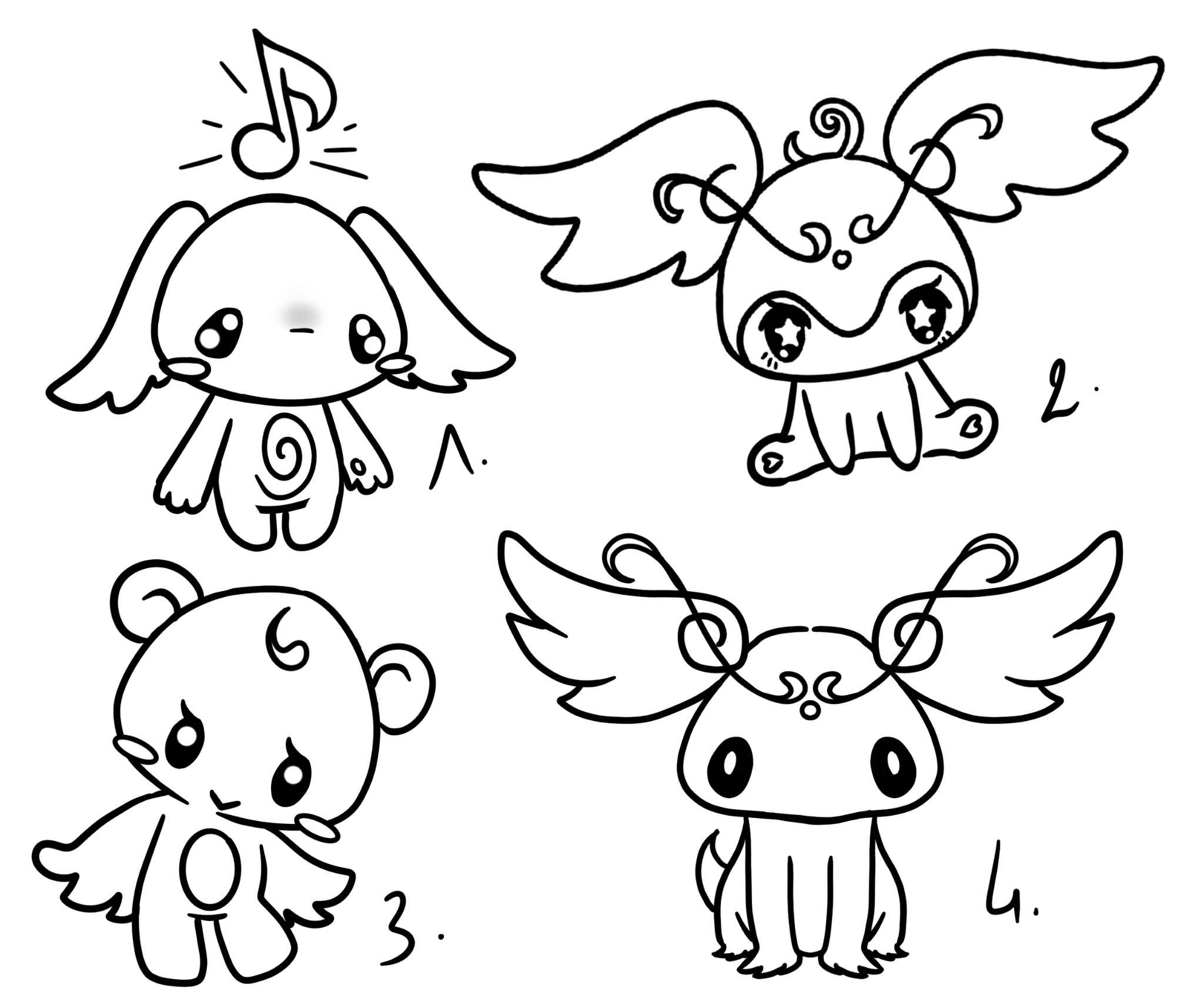
At the heart of these duels appear the Melodus: small divine creatures sensitive to music (in the rules and on cards, you may sometimes see them called “Mascots”). When soothed by Korr, they continue their natural cycle and contribute to Fraktar’s harmony.
When magic becomes an industry
With the modern era, everything changed.
A mega-corporation called Herd industrialized magic, turning Korr into an energy resource and duels into planet-wide spectacles. Thanks to an unstable energy called Kroma, Herd became Fraktar’s leading economic power.
Officially, Herd acts to protect the world, provide energy, and guarantee stability.
In reality, the world’s music began to fall out of tune.
The Melodus became rarer and rarer. In their place appeared corrupted Titans: gigantic destructive entities emerging at the edges of megacities.
Facing this threat, an organization of independent mages — the Magical Defense Society — claims that the corruption of magic and the commodification of Korr are at the core of the problem.
Two visions now stand opposed: control or harmony.
Why the lore changed
This new version of the universe wasn’t born by accident.
We needed a world:
- that naturally explains the gameplay
- that gives meaning to duels without relying on violence
- that lets players choose a side without pure good vs evil
- and that can evolve in the long run
This new lore allows us to connect:
- real-time music
- the idea of an audience, marking, and conversion
- character progression
- and potential narrative choices
Everything you do in the game now exists diegetically inside Fraktar.
The player’s role
In Herd, you play as a Korr duelist.
On stage, you compose a track live by programming musical cards.
Around you, the audience reacts, gets convinced, and switches sides.
But your choices go beyond the arena. You can work for Herd, join the Magical Defense Society, or operate on the margins of the major powers.
Each character has their own story, their relationship to Korr, and their worldview. Discovering Herd also means discovering these individual trajectories, caught in a conflict bigger than themselves.
Herd remains a competitive musical duel game — but it also becomes a world to explore, understand, and sometimes question.
The world’s music keeps playing.
It’s up to you to decide how you want to take part.
Devices
Herd is a collectible card game playable solo or multiplayer.
We’re aiming first for a PC release on Steam (notably the Steam Neo Fest in June for the demo’s official release), then Android/iOS ports.
Gameplay
Herd is a 1v1 musical duel game, combining strategic card play and live performance.
Two players compose a track in real time, play cards across different musical categories, and try to win over the audience. The winner is the player who converts the most Melodus to their side.
A match lasts about 13 minutes — the music never stops.
The board
You play on a board divided into three areas:
- Center: the Neutral Zone, which contains the Active Category slots and Neutral Stands
- Player A half-board, with placed cards, resources, and Player A stands where converted Melodus gather
- Player B half-board, same principle
The board is called the Soundboard, divided into 5 musical categories: Drums, Bass, Chords, Melody, Voices.
Only one card can be Active per category, and that Active slot is shared by both players. Taking a category means ripping musical control away from your opponent. At each resolution phase, the game plays only the music from the Active Category cards — and triggers their effects.
So the track is constantly composed and recomposed by both players, as they seize and lose control over categories.
The audience (the Melodus)
The match starts with 20 Melodus in the Neutral Stands.
Using your cards, you first try to mark Melodus, then convert them. Once converted, they move into your stands.
End of match
The match ends if:
- 13 rounds have passed
- one player has converted all Melodus
- one player has no cards left in their draw pile
Cards
Each card has:
- a musical category
- a cost
- an intensity level
- an effect
There are three main effect types:
- Active: only triggers if the card is in the Active Category slot
- Soundboard: triggers as long as the card is placed on your Soundboard
- Utility: triggers instantly, then the card is discarded
Herd is a reading game:
- will they contest this category?
- is this the right moment to activate/reactivate?
- do I secure… or do I swing right now?
The current gameplay offers many different styles and game plans, all based on simple rules: marking (three different marking rules that interact), conversion, and category control.
It’s both a card duel… and a co-creation moment: every match is unique, and every track you compose with your opponent is unique too.
Characters & styles
Characters are now tied to gameplay because they represent a musical Style.
A Style is the blend of two Genres. Each card has a Genre, and if you control both Genres that define your character’s Style as Active Category cards, you gain an advantage.
Progression (MVP)
In the MVP:
- when you launch the game, you choose a starter character and a starter deck
- the more you play a character, the more they level up, unlocking:
- new cards (via boosters or starter decks)
- musical variants (same card, but different Genre — meaning a different sound)
- talents
- cosmetics
From the demo release, you’ll be able to access all the content developed at that moment for free.
In short
Herd is now:
- an accessible but highly tactical deckbuilder
- a fast, tense duel with no downtime
- a living musical experience where every decision is audible
- a game of timing, style, and reading
Your goal isn’t to “defeat” your opponent — it’s to win over the crowd.
Roadmap 2026
New product, new roadmap — and it’s far clearer than last year, so let’s go.
GAMEPLAY
- Core ruleset (DONE)
- 2 balanced decks implemented (DONE)
- 6 balanced decks total with 3 different marking rules (meta creation) (DONE)
- In-game UX and navigation (in progress, planned delivery Feb 27)
DEVELOPMENT
- 2 decks implemented (DONE)
- Localization EN/FR/JP (DONE)
- 3C implementation (DONE)
- Multiplayer (in progress, planned delivery Feb 19)
- Card system with the card template (planned delivery Feb 23)
- Match resolution system (planned delivery Mar 12)
- Final musical engine implementation (planned delivery Mar 24)
- Steam demo (planned delivery Apr 2 — this first iteration will have very little visual content, sensitive souls beware)
- Visual polish (planned delivery Apr 16)
- UI and navigation implementation (planned delivery May 7)
ART DIRECTION
- Card template (DONE)
- AD – UX/UI (planned delivery Feb 19)
- UX/UI mockups (planned delivery Feb 27)
- Mockup animations (planned delivery Mar 13)
- Arena/boards modeling (planned delivery Apr 2)
- Melodus modeling and animations (planned delivery Apr 17)
- Camera system (planned delivery Apr 20)
- Board polish / shaders / lighting (planned delivery Apr 24)
- 3D card animations (planned delivery May 1)
- VFX and misc polish (planned delivery May 8)
- Card illustrations (we’ll do as many as possible for the demo, planned delivery Jun 1)
AUDIO
- Work Unit ready for integration (in progress, planned delivery Feb 9)
- Composition extension: 6 versions per intensity (18 stems per card for 32 cards) (in progress, planned delivery Feb 27)
- Musical polish and engine polish (planned delivery Apr 25)
Demo content
All this work should allow us to ship a demo with the following loop:
- You launch the game
- You choose a starter character and a starter deck
- You play
- You earn rewards (characters, boosters, starter decks)
- You grow your card collection
- You build your own deck
- You replay
- You earn more rewards
At that point, you’ll be able to unlock all the content available at that time.
We want the game to be as stable, playable, and fun as possible for Steam Neo Fest. The project’s future will depend on the results we get during that festival.
Alright — now you truly know everything. Feel free to share your reactions and feedback on the public Discord!
The Herd team